In 2022, immediately after Covid travel restrictions in New Zealand were relaxed, we booked a winter trip to the South Island. The primary goal of our trip? Milford Sound!
Milford Sound is New Zealand’s most well-known fjord (which is rather paradoxical – shouldn’t it be called Milford Fjord?). Located a 2-hour drive from Te Anau and in the middle of vast untouched wilderness, Milford Sound is home to the famed Mitre Peak, as well as jaw-dropping views of waterfalls tumbling down sheer cliffs.

When we were planning our trip, we knew that we wanted to self-drive instead of taking the bus. But we also know how gnarly New Zealand alpine roads can get, especially in the winter. And the road to Milford Sound from Te Anau is notorious for being one of the most dangerous roads in New Zealand.
There was surprisingly little information online about driving to Milford Sound in winter. The few blogs I could find glossed completely over the safety aspect, which I found concerning. I ended up going to the NZTA website and asking around on various forums.
This post is the culmination of all the research that I did prior to making the drive, as well as our personal experiences.
It was 100% worth it, by the way. With a few precautions, the drive becomes reasonably safe, and the views on the road were out of this world.

Why drive to Milford Sound in the winter?
There are several ways to get to Milford Sound. Most people take the bus, and a few people drive. Even fewer splurge for scenic flights from Queenstown.
We decided to drive because we really enjoy the flexibility that driving brings. However, it’s not necessarily the right decision for everyone.
As for going in the winter? Again, not a popular choice. However, I’ve been fortunate to visit Milford Sound in both the summer and the winter, and personally I have to say that I very much prefer the winter.
Benefits and drawbacks
Benefits of self-driving to Milford Sound in winter
- Fewer crowds. Most people visit in the summer, so going in the winter reduces the number of people sharing the space with you. Also, having the place all to yourself after the day-tour buses leave is an incredible feeling.
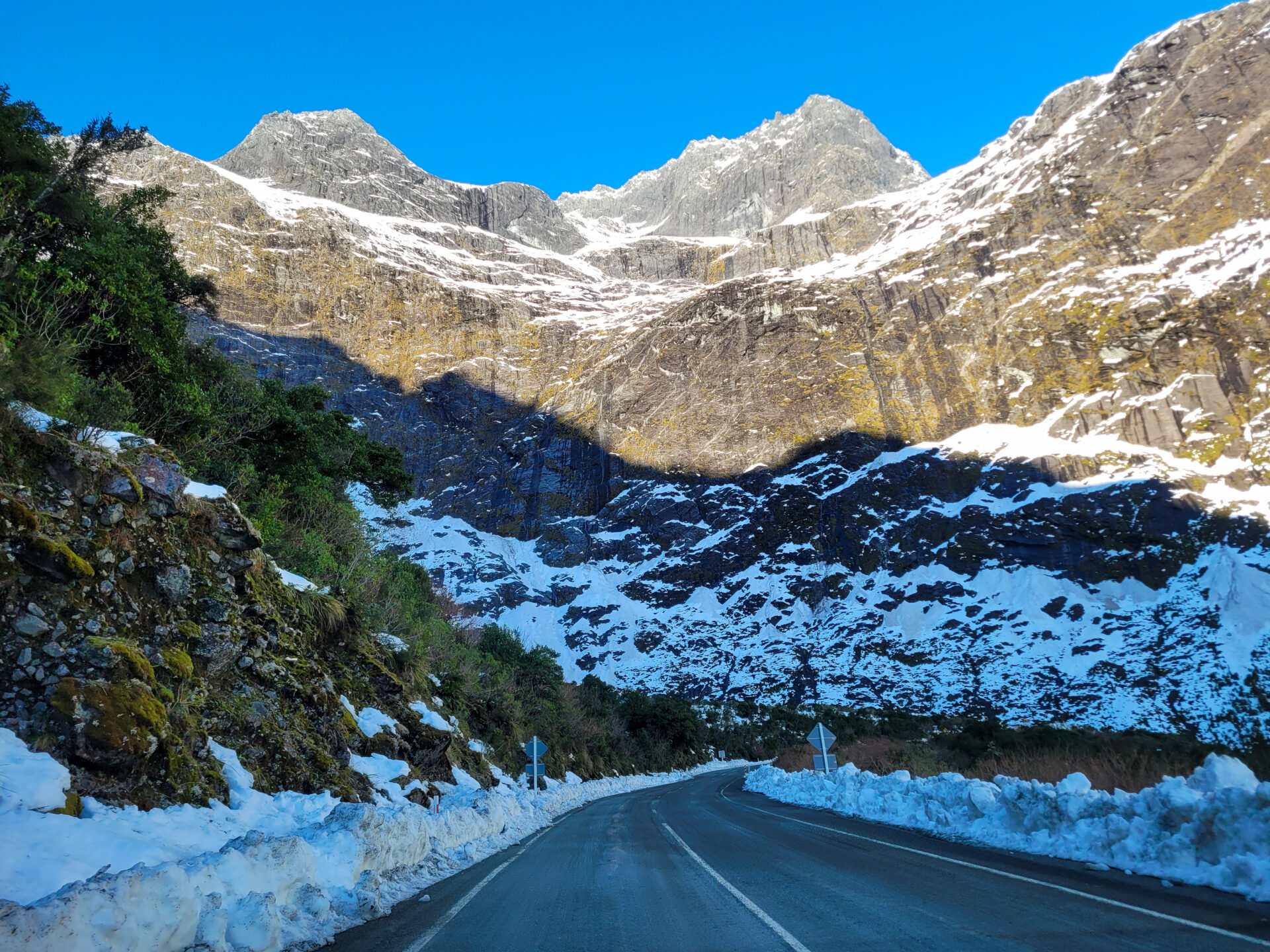
- Gorgeous snowy landscapes, and Mitre Peak is snow-capped. On your drive in and out, you will be immersed in a winter wonderland. The road to Milford Sound crosses an alpine pass, and the sheer, towering cliffs decked out in snow are a sight that I’ll never forget.
- More flexibility to stop along the way. Tour buses are in a hurry, and they will usually only stop at Mirror Lakes and Monkey Creek, for a few minutes each. But there are so many more viewpoints along the way, and so much to enjoy during each stop. If you drive, you can stop anywhere that is safe for as long as you like (i.e. NOT in the avalanche zone).
- Less rain. The rainiest months are January and December, so there’s a higher chance of rain in the summer. This is a contentious point, though, because some people prefer Milford Sound in the rain – the waterfalls down the fjords are at their most magnificent when it’s rainy. Rain and overcast weather can obscure the scenery significantly, however; when I took a Milford Sound cruise on a rainy day in the summer, we couldn’t see Mitre Peak at all due to the low clouds, and the sea was roiling.
- The ability to stay overnight. Most bus tours are day trips, and for good reason – other than camping, there’s only one accommodation in Milford Sound, and it’s expensive and has limited availability. If you do stay overnight, though, you are rewarded with the most beautiful sunsets and sunrises, and you can see Mitre Peak at both high tide and low.

Disadvantages of self-driving to Milford Sound in winter
- The days in winter are short, and the drive is long. If you are self-driving, this means that it’s more difficult to pull off a day trip safely. If you self-drive and are visiting in the winter, I would recommend staying a night. Don’t even try driving when the sun is down, it’s extremely risky.
- Unsafe for people without alpine driving experience. Winter driving comes with additional risks, such as slippery black ice on roads, snow, and the potential for avalanches. I found this to be a challenging drive, even though my husband and I have driven on New Zealand alpine roads before. I would recommend taking the bus if you are inexperienced with alpine driving.
- You need to be focused and alert the whole time. You always have to be alert with New Zealand roads, where the lack of guardrails and dividers means that a brief moment of inattention can be fatal. But it is especially the case with the road to Milford Sound from Te Anau, which is winding, narrow, and steep. If you are taking the bus, you can lean back and relax.

Necessary precautions
Choosing a rental car
I personally wouldn’t feel safe driving to Milford Sound in the winter without a 4WD or AWD vehicle. It’s not strictly required, however, and some people do drive there with normal cars, even in the winter.
If you don’t want to rent a 4WD or AWD, at the very least rent a sizable sedan with a low center of gravity. The little compact cars have no weight or traction, which is dangerous on the winding and slippery roads.
And don’t even think about driving a campervan to Milford Sound in the winter, especially if you’ve never driven one before.
You will need either winter tires or snow chains for the drive. If you are renting a car in Queenstown in the winter, your car will almost certainly come with them, but you should double-check just to be sure.
If you are using snow chains, read the instructions and practice putting them on once before driving. It’s harder than it looks!
Prepare for potential road closures
The Milford Road is the only way to get to Milford Sound by land vehicle. If the road is closed, you will not be able to make your trip.
Check the NZTA website the night before and on the morning of your drive. They will close the road if avalanche danger is high, or if weather conditions make it too risky.
Make sure your plans are flexible enough that you can do the trip on another day if the road is closed. If you are staying the night in Milford Lodge and you can’t go due to road closure, they will refund you the cost of your accommodation.
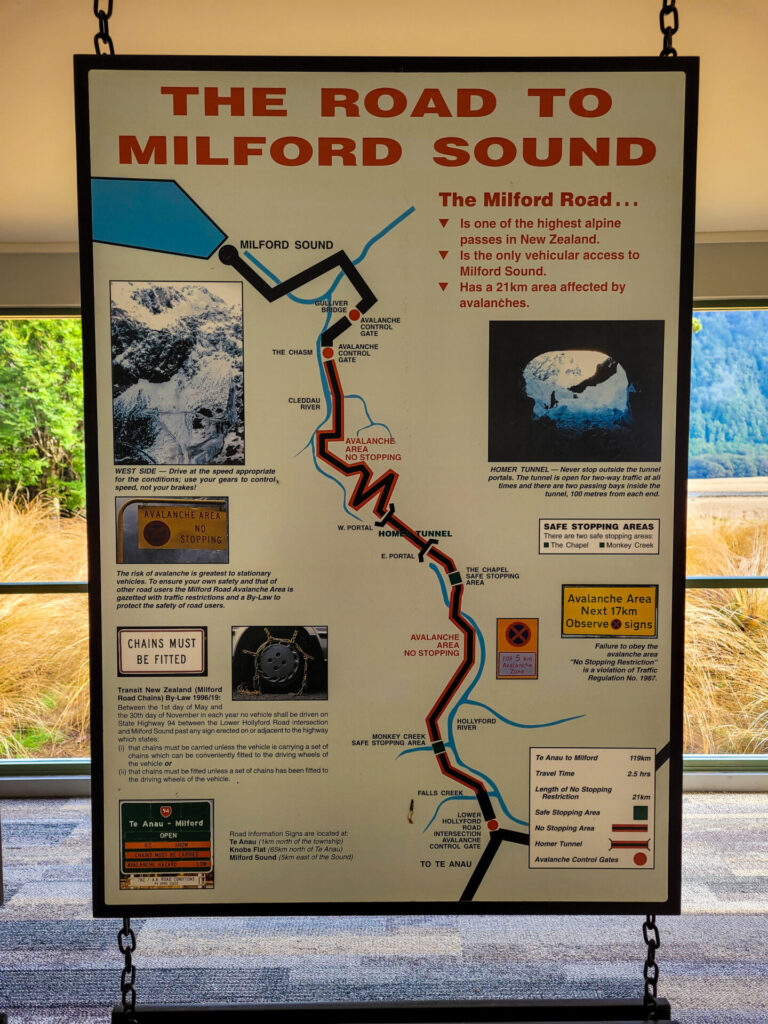
Avalanche safety
21 kilometers of the road to Milford Sound are in avalanche-prone areas. And avalanches are most prevalent during the winter and spring months.
This isn’t as dangerous as it sounds, because the avalanche control team patrols the area, sets off avalanches prematurely if needed, and closes the road if deemed necessary. You can read more about the avalanche control program here.
However, you need to follow the instructions, namely: When you are in the avalanche zone, do NOT stop anywhere that isn’t specifically designated as a safe stopping area.
Most of the road from Falls Creek to The Chasm is considered an avalanche zone, with only a few safe stopping areas. Yes, this does mean that some viewing points are off-limits if you do the drive in the winter.
However, the viewing points prior to Falls Creek (e.g. Mirror Lakes) are fine as they are not within the avalanche zone.

Road safety
- To reduce the risk of black ice on the roads, don’t set off immediately upon sunrise. Black ice is a layer of transparent ice that forms on a road’s surface overnight, usually in the winter. Give the sun time to melt the black ice for a couple of hours.
- Carry snow chains with you. You must put them on at the snow chain bay if the road sign says so. The signs are updated every day.
- Give yourself plenty of time. Do NOT rely on the Google Maps time estimates when planning your trip. It’s safest to give yourself 2.5 hours to drive to Milford Sound from Te Anau if you are not stopping along the way, as you might experience a long wait at Homer Tunnel. If you want to enjoy Eglinton Valley, Mirror Lakes, and Monkey Creek with a stop at Knobs Flat toilets, I’d give it 3.5 hours.
- Try to stay the night in Te Anau if possible. Driving from Queenstown adds a couple of hours each way to an already demanding and challenging drive. If you are doing Milford Sound as a day trip, don’t base yourself in Queenstown – the drive is 5 hours one way from Queenstown, which makes it 10 hours return. If you are driving from Queenstown, you must stay the night.
The drive to Milford Sound from Te Anau
With over a dozen viewpoints and walking tracks, and jaw-dropping views of sheer cliffs, the drive to Milford Sound from Te Anau is every bit as epic as the Sound (or rather, fjord) itself.
Here are some popular stops and notable locations, in order of distance from Te Anau.
Eglinton Valley

Eglinton Valley is a fairly short stop, as there isn’t any trail to walk. However, it’s worth doing it anyway for that feeling of being surrounded by a vast expanse of wilderness – you feel like you’re in a Lord of the Rings reenactment!
Mirror Lakes
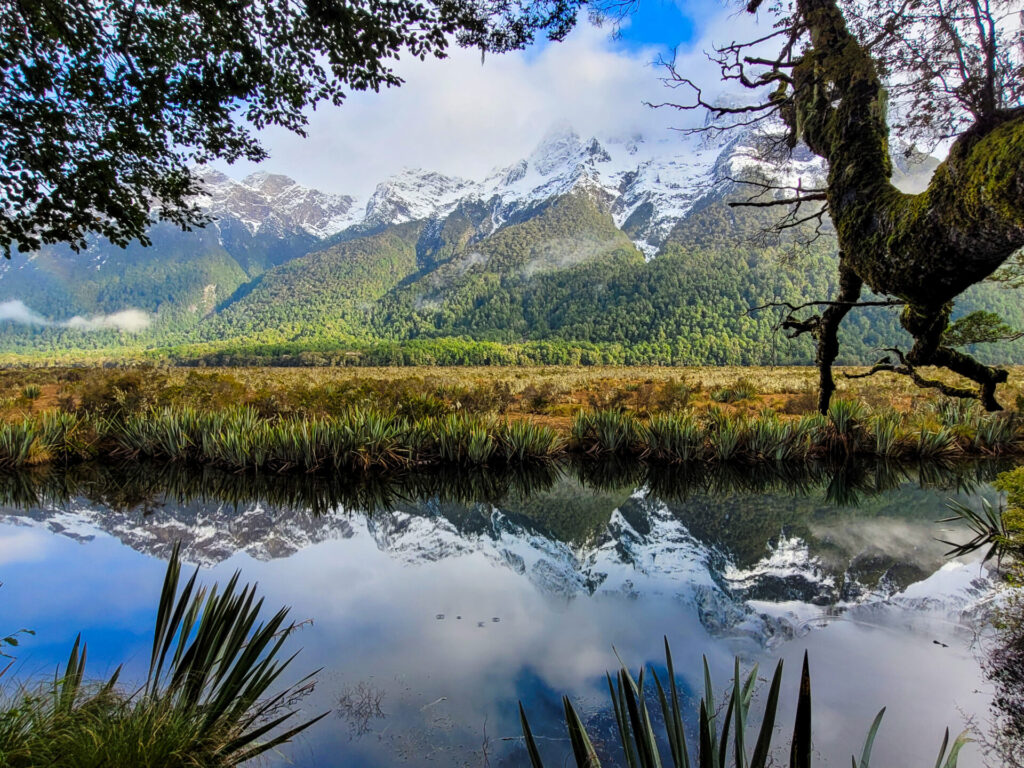
If you have to pick just one stop to stop at, make it Mirror Lakes. On a calm, clear day, I’d rate the views at Mirror Lakes as on par with Milford Sound itself. The lake really is practically a mirror, reflecting the majestic peaks around it with breathtaking perfection.
We spent 30 minutes here, doing the short walk and then just sitting by the lake in tranquil bliss. It’s a very popular stop for big tour buses, but they’re only here for 5 minutes, so for the rest of the time you can enjoy the place in complete silence.


If it’s a bit cloudy but windless, it still looks amazing and you still do get the perfect mirror effect.
However, if there is strong wind or rain, or if the peaks are completely covered with fog, you won’t see much. On my first trip here during a rainy day in the summer, I wondered what all the fuss was about – I could barely see past the lake!
So if it’s windy and rainy, skip this lookout on your way to Milford Sound. On your way back, try again. The weather in New Zealand can change quickly, and you might get lucky.
Knobs Flat toilets
The Knobs Flat toilets near Eglinton Valley Camp are the last flush toilets between Te Anau and Milford Sound. Trust me, you really want to avoid the long drop toilets if you can.
It also functions as a visitor’s center for the Milford Rd, with a very handy map of avalanche areas and safe stopping areas.

Lower Hollyford Rd Junction (Falls Creek Falls)
The junction between Lower Hollyford Road and Milford Road is the start of the avalanche zone. The road will get progressively steeper and windier here as you ascend up one of the highest alpine passes in New Zealand, and the scenery becomes more snow-covered.
Homer Tunnel
Homer Tunnel is one of the scariest (but also coolest) parts of the drive. The tunnel itself is very rudimentary, not at all the same as what you’d see in the big cities.

After entering the tunnel, all traffic is one-way, so there will be traffic controls beforehand dictating which direction is allowed to pass. You might wait a good 10-20 minutes outside the tunnel; don’t worry, it’s normal.
The floor of the tunnel is slippery, and immediately after you exit, you’ll descend a series of switchbacks and hairpin turns that are not for the faint-hearted.
Go slow. Saving 5 minutes isn’t worth your life.

Monkey Creek
One of the two safe stopping areas in the avalanche zone, Monkey Creek is a popular stop with gorgeous views.
It can be a little hard to access due to the entry being in the middle of a turn, and it can get pretty snowed-over in the winter. It’s easier to visit on your way from Te Anau to Milford Sound rather than on the return journey, as the entry will be on your left.
Kea, New Zealand’s famed and endangered alpine parrots, are frequently found in the Monkey Creek carpark. Please do not feed them!
The Chasm Viewing Bridge
Right on the other end of the avalanche zone, this used to be a gorgeous viewpoint. However, the bridge is currently closed.
Additional tips
- The Lake Marian track and Key Summit track are popular hiking tracks that start from Milford Road. They are challenging, however, and it’s not advisable to do them in the winter without appropriate experience and gear.
- There are no petrol stations between Te Anau and Milford Sound. Make sure to fill your tank with petrol before starting the drive.
- Cell phone connectivity is very limited once you leave Te Anau. Milford Sound itself now has cell phone reception, but you won’t have any on Milford Road. Download maps before the drive if you need it. There’s only one road in and out, so you won’t make a wrong turn, but it can be helpful to know where the viewpoints are.
In my next blog post, I’ll be writing about how to spend an overnight trip in Milford Sound: things to do, where to stay, where to eat, etc. Stay tuned!